
LOVE: SACRED & SECULAR
Programme
Suffolk Chamber Choir directed by Dominic Ellis-Peckham
Song Circle directed by Anna Winton Mills
7th February 2026 at 7.30pm, St Mary's Church, Bury St Edmunds
Love is at the core of human experience. It is a universal thread running through our lives and through the music we listen to, write and perform. All forms of love, romantic, platonic, sacred, a love of place and community, are celebrated through music across time and genre. Love has inspired composers to reach their most creative heights in their responses to this enduring theme. As Rabindranath Tagore said My spellbound heart has made and remade the necklace of songs
.
Adoro showcases a number of glorious choral works from the sixteenth century to the present day. The works range from classical pieces to popular music and arrangements of folk songs. They include Tallis's well-known anthem If ye love me, with a modern reflection from Frank Ferko, Stanford's radiant The Blue Bird, and contemporary masterpieces such as Cecilia McDowall's passionate Adoro te, with its echoes of Allegri's sublime Miserere. It is a programme designed to stir the heart and set the mood for that global celebration of love and romance on 14 February: the Feast of St Valentine.
 We are proud to be donating the proceeds from this concert to Bury Drop In. For over ten years, Bury Drop In has been a vital lifeline in the community, offering support to people experiencing homelessness, from providing a safe warm place to helping individuals access essential services. For more information, visit Bury Drop In or pick up a leaflet from the back of the church this evening.
There will be a short interval where refreshments will be served
Please set your phone to 'silent', and turn down the brightness if viewing this online programme during the concert. Thank you!
Tap to open and close each item below for commentary and text
First Half
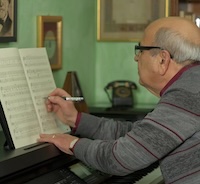 Mariano Garau (b1952) is a Sardinian composer of sacred vocal works. The first of two settings of Adoro te in this concert, this piece for 3 voices sets the words of St Thomas Aquinas to a deceptively simple strophic hymn structure. Like much of Garau's music, it is subdued, but reveals an inner world of remarkable depth and heartfelt and transcendent spirituality.
Adoro te devote, latens deitas,
Quæ sub his figuris vere latitas;
Tibi se cor meum totum subicit,
Quia te contemplans totum deficit.
In cruce latebat sola deitas,
sed hic latet simul et humanitas.
Ambo uere credens atque confitens,
peto quod petiuit latro penitens.
Jesu, quem velatum nunc aspicio,
Oro, fiat illud quod tam sitio:
Ut te revelata cernens facie,
Visu sim beátus tuæ gloriæ. Amen.
I devoutly adore you, hidden deity,
Who are truly hidden beneath these appearances.
My whole heart submits to You,
because in contemplating You, it is fully deficient.
On the cross only the divinity was hidden,
But here the humanity is also hidden.
Yet believing and confessing both,
I ask for what the penitent thief asked.
Jesus, whom now I see hidden,
I ask You to fulfill what I so desire:
That the sight of Your Face being unveiled
I may have the happiness of seeing Your glory. Amen.
The Cornish song I love my love tells a dramatic love story with (unusually for a folk song) a happy ending: Nancy's lover is sent off to sea by his parents in an attempt to ruin the relationship. She becomes so distraught that she is sent to the infamous Bedlam mental hospital, but her lover returns and rushes to rescue her, they marry, and live happily ever after. Holst's beautiful setting has dramatic changes of dynamics, voicing, and harmonies to illustrate the mood of the text. He uses word painting very effectively to highlight intense feelings: listen for example to the passages where disjointed upper voices reflect Nancy's mental turmoil when all seems lost.
Abroad as I was walking, one evening in the spring,
I heard a maid in Bedlam so sweetly for to sing;
Her chains she rattled with her hands,
and thus replied she:
"I love my love because I know
my love loves me!
O cruel were his parents who sent my love to sea,
And cruel was the ship that bore my love from me;
Yet I love his parents since they're his
although they've ruined me:
I love my love because I know
my love loves me!
With straw I'll weave a garland, I'll weave it very fine
With roses, lilies, daisies, I'll mix the eglantine;
And I'll present it to my love
when he returns from sea
I love my love because I know
my love loves me!
Just as she there sat weeping, her love he came on land,
Then, hearing she was in Bedlam, he ran straight out of hand;
He flew into her snow white arms,
and thus replied he:
I love my love because I know
my love loves me!
She said: "My love don't frighten me; are you my love or no?"
"O yes, my dearest Nancy, I am your love, also
"Also I am return'd to make amends for all your injury;
I love my love because I know
my love loves me!
So now these two are married, and happy may they be
Like turtle doves together, in love and unity.
All pretty maids with patience wait
that have got loves at sea;
I love my love because I know
my love loves me!
One of the most recognised and popular anthems from the English Renaissance, If ye love me is a setting of a passage from the Gospel of John. Thomas Tallis, a prominent musician of the Chapel Royal at the time, was among the first to write sacred music in English following the Reformation. During the reign of King Edward VI, church composers who had previously written vocal music in Latin were required to use English texts and to write in a simple style, "to each syllable a plain and distinct note". The first section is homophonic, the repeated second section is largely imitative and contrapuntal.
If ye love me, keep my commandments.
And I will pray the Father,
and he shall give you another comforter,
that he may 'bide with you forever;
E'en the sp'rit of truth.
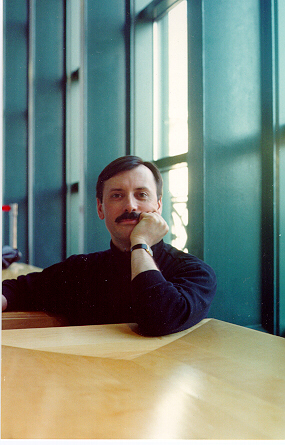 Frank Ferko (b1950) is an American composer of choral and organ music. Reflection was composed as a commentary on Tallis' well-known motet. It has a similar structure, but with a contemporary harmonic treatment featuring tone clusters. The second half starts with a very simple four-voice contrapuntal texture, which expands into a more active and complex style from one section of the choir, while a second group of voices returns to the homophonic style, so that the motet ends with a mixture of homophonic and contrapuntal textures.
If ye love me, keep my commandments.
And I will pray the Father,
and he shall give you another comforter,
that he may 'bide with you forever;
E'en the sp'rit of truth.
 Born in 1951, Cecilia McDowall, a long-time collaborator of Artistic Director Dominic Ellis-Peckham, has been described as having
 a communicative gift that is very rare in modern music
. This beautiful piece was written for the Westminster Cathedral Choir and dedicated to the memory of the victims of the Nepalese earthquake in April 2015. The words by St Thomas Aquinas are part of a Eucharistic hymn text. Flowing and expressive, it features homophonic sections, melismatic lines, and soaring soprano solos reminiscent of Allegri's Miserere.
Adoro te devote, latens deitas,
Quæ sub his figuris vere latitas;
Tibi se cor meum totum subicit,
Quia te contemplans totum deficit.
Visus, tactus, gustus in te fallitur,
Sed auditu solo tuto creditur.
Credo quidquid dixit Dei Filius;
Nil hoc verbo Veritátis verius.
Jesu, quem velatum nunc aspicio,
Oro, fiat illud quod tam sitio:
Ut te revelata cernens facie,
Visu sim beátus tuæ gloriæ. Amen.
I devoutly adore you, hidden deity,
Who are truly hidden beneath these appearances.
My whole heart submits to You,
because in contemplating You, it is fully deficient.
Sight, touch, taste all fail in their judgment of you,
But hearing suffices firmly to believe.
I believe all that the Son of God has spoken;
There is nothing truer than this word of Truth.
Jesus, whom now I see hidden,
I ask You to fulfill what I so desire:
That the sight of Your Face being unveiled
I may have the happiness of seeing Your glory. Amen.
Amanda McBroom: The Rose
Menken/Schwartz: Colours of the Wind
Leonard Cohen: Hallelujah
Marguerite Monnot/Edith Piaf: If you love me, I won't care
Harold Arlen/Joanna Forbes: Over the Rainbow
Gordon Sumner: Fields of Gold
Trad. arr Alexander L'Estrange: Danny Boy
Carl Strommen: We are the Music
Interval
Second Half
The Blue Bird is a romantic partsong composed in 1910. It is considered one of the best English partsongs ever written. It is set to a poem by Mary Elizabeth Coleridge, which depicts a kingfisher (presumably) in flight over a lake. In the text, blue dominates land, water and sky, creating a static environment interrupted momentarily by the bird's flight. The imagery is reflected in the music: the wide-ranging Soprano part represents the bird's free flight, set against the stillness of the scene which is mirrored in the slow-moving nature of the music, and the repeated E-flat 'blue'. Compare Vaughan Williams' The Lark Ascending for violin and orchestra, written four years later, which is similarly rooted in a deep love of place.
The lake lay blue below the hill.
O'er it, as I looked, there flew
Across the waters, cold and still,
A bird whose wings were palest blue.
The sky above was blue at last,
The sky beneath me blue in blue.
A moment, ere the bird had passed,
It caught his image as he flew.
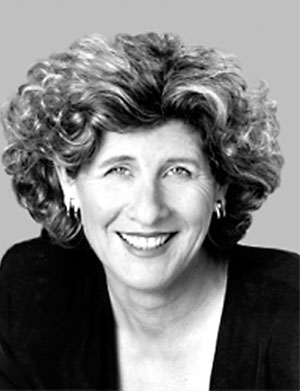 Eleanor Daley (b1955) is a Canadian composer of choral and church music. This is a warm and tender piece setting the last three verses of Christina Rossetti's 'What good shall my life do me?', which encourages leading a life of love as an example for others. Daley's heartfelt melodies are set to hymn-like textures and flow freely in ever-changing time signatures.
O ye who taste that Love is sweet,
Set waymarks for the doubtful feet
That stumble on in search of it.
Sing hymns of Love, that those who hear
Far off in pain may lend an ear
Rise up and wonder and draw near.
Lead lives of Love, that others who
Behold your lives may kindle too
With Love and cast their lots with you.
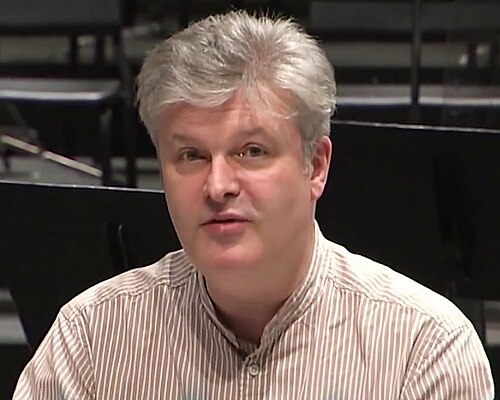 Sir James MacMillan (b1959) is a Scottish composer and conductor. So Deep is a superbly imaginative arrangement of Robert Burns's O my luve's like a red, red rose (Burns wrote both words and melody). The melody winds its way through this arrangement supported by a variety of drones (bagpipe-like at times). A little later the accompanying voices repeat the words
 so deep
in their own time to create what MacMillan describes as the ebb and flow of a large, gentle wave
.
O my Luve's like a red, red rose
That's newly sprung in June:
O my Luve's like the melodie
That's sweetly play'd in tune
As fair art thou, my bonnie lass
So deep in luve am I:
And I will luve thee still, my dear
Till a' the seas gang dry:
Till a' the seas gang dry, my dear
And the rocks melt wi' the sun;
I will luve thee still, my dear
While the sands o' life shall run
And fare thee weel, my only Luve!
And fare thee weel a while!
And I will come again, my Luve
Tho' it were ten thousand mile
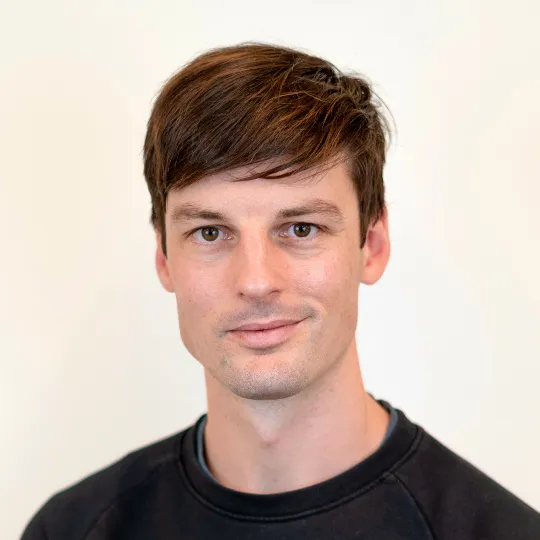 Ed Newton-Rex is a London-based composer of choral and piano music and the founder of the AI non-profit organisation Fairly Trained which seeks to ensure creators are treated fairly in the process of training AI models. This Marriage sets a poem translated from the 12th-century Persian poet and Sufi mystic known as Rumi, in which blessings are wished on a married couple. The homophonic music, with no dynamic indication, gently allows the words to sound.
May these vows and this marriage be blessed.
May it be sweet milk,
this marriage, like wine and halvah.
May this marriage offer fruit and shade
like the date palm.
May this marriage be full of laughter,
our every day a day in paradise.
May this marriage be a sign of compassion,
a seal of happiness here and hereafter.
May this marriage have a fair face and a good name,
an omen as welcomes the moon in a clear blue sky.
I am out of words to describe
how spirit mingles in this marriage.
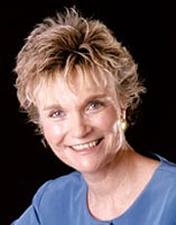
My Funny Valentine is a show tune from the 1937 Rodgers and Hart coming of age musical Babes in Arms. American composer and prolific arranger of popular song Teena Chinn, brings us an easy-going a cappella setting of this most popular of songs from the Great American Songbook.
My funny valentine,
Sweet comic valentine,
You make me smile with my heart.
Your looks are laughable,
Unphotographable,
Yet you're my favorite work of art.
Is your figure less than Greek?
Is your mouth a little weak?
When you open it to speak
Are you smart?
But don't change your hair for me,
Not if you care for me.
Stay, little valentine, stay.
Each day is Valentine's Day.
I Only Have Eyes for You is a song by composer Harry Warren and lyricist Al Dubin, written for the 1934 film Dames. It was recorded by several artists, most notably the Flamingos in 1959 in a doo-wop style that quickly became a commercial success. The production featured piano, guitar and gentle brush-driven drums in a stretched-out triplet rhythm, with heavy reverb on the vocals. This lush a cappella arrangement preserves the laid-back style of that version of the song, using a compound time signature and duplets throughout the melody, and a heavily layered doo-wop backing. Arranger Rachael Lloyd is better known as an operatic mezzo-soprano and vocal teacher (she recently played the role of Cathy in the world premiere of Mark-Anthony Turnage's new opera of The Railway Children at Glyndebourne).
My love must be a kind of blind love
I can't see anyone but you
(Sha bop sha bop)
(Sha bop sha bop)
(Sha bop sha bop)
(Sha bop sha bop)
(Sha bop sha bop)
Are the stars out tonight (sha bop sha bop)
I don't know if it's cloudy or bright (sha bop sha bop)
I only have eyes for you dear
(Sha bop sha bop)
The moon may be high
(Sha bop sha bop)
But I can't see (sha bop sha bop) a thing in the sky
I only have eyes for you
I don't know if we're in a garden
Or on a crowded avenue
(Sha bop sha bop)
You are here
(Sha bop sha bop)
And so am I
(Sha bop sha bop)
Maybe millions of people (sha bop sha bop) go by
But they all disappear from view
And I only have eyes for you
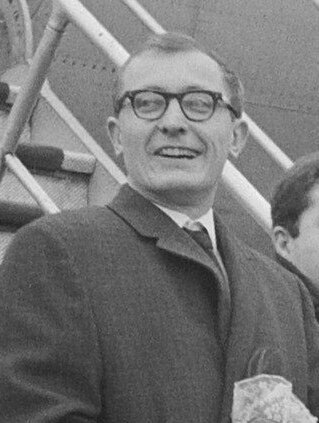 Ward Swingle was an American singer and the founder of the Swingle Singers vocal group which mostly performed a cappella jazz music, such as this arrangement of Shakespeare's famous sonnet. Written for eight voices (SSAATTBB), the text has a lot of scat-like syllables (
hey-ding-a-ding
) which Swingle adapted to use as part of the rich guitar-like accompaniment.
It was a lover and his lass,
With a hey, and a ho, and a hey nonino.
That o'er the green cornfield did pass,
In spring time, the only pretty ring time,
When birds do sing, hey ding a ding a ding:
Sweet lovers love the spring.
Between the acres of the rye,
With a hey, and a ho, and a hey nonino,
These pretty country folks would lie.
In spring time, the only pretty ring time,
When birds do sing, hey ding a ding a ding:
Sweet lovers love in the spring.
And therefore take the present time,
Any with hey, and a ho, and a hey nonino,
For love is crowned with the prime
In spring time, the only pretty ring time,
When birds do sing, hey ding a ding a ding:
Sweet lovers love the spring.
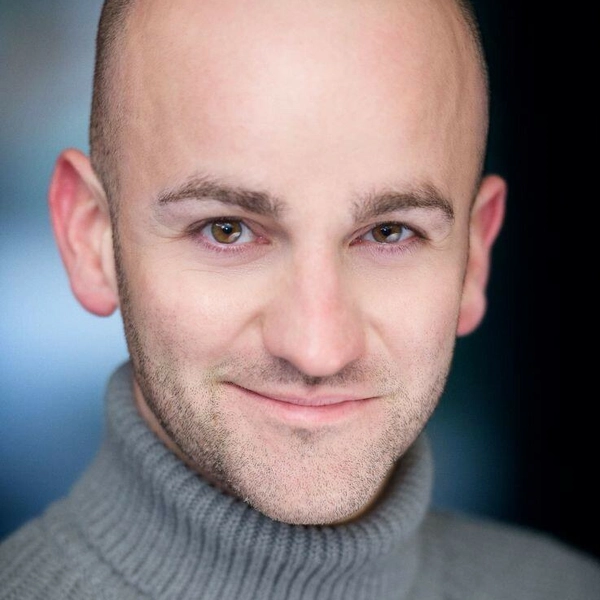
Conductor & Artistic Director
Dominic Ellis-Peckham: conductor and chorus master, specialising in opera and choral repertoire. He has been praised for his dedication to music of the Renaissance and Baroque, whilst also passionately championing new works and delivering inspirational collaborations. In addition to his work with Suffolk Chamber Choir he heads the London Oriana Choir, the Chamber Choir of London, is Chorus Master for Opera Holland Park and Chorus Director and Visiting Artist at Trinity Laban Conservatoire of Music and Dance.
Song Circle
Directed by Anna Winton Mills
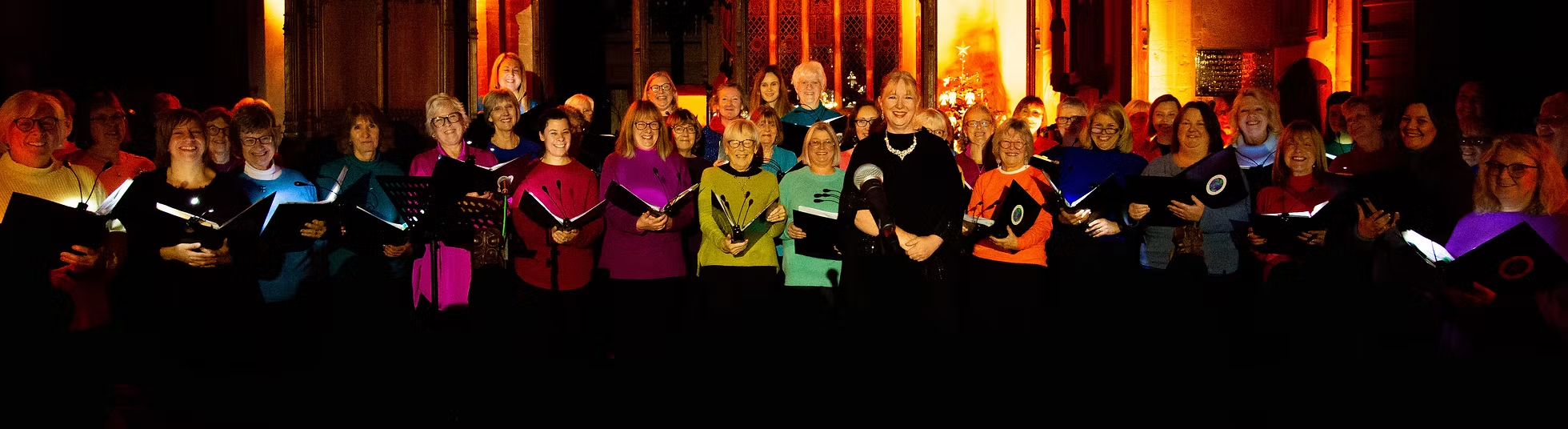
We are an upper voices choir based in Mid-Suffolk, joining communities together in song. We cover a broad range of music from musicals to pop songs to light classical and other well known pieces. Whether you love to sing or have never sung, Song Circle will welcome you with open arms. The choir was formed four years ago by Anna Winton Mills, a well-known local musician with four decades' teaching experience. In that time we've grown to have over 100 active members spread over five (very relaxed and friendly) rehearsal groups.
if you would like some more information about what we do, please do not hesitate to contact us by email: songcirclechoir@gmail.com
Suffolk Chamber Choir
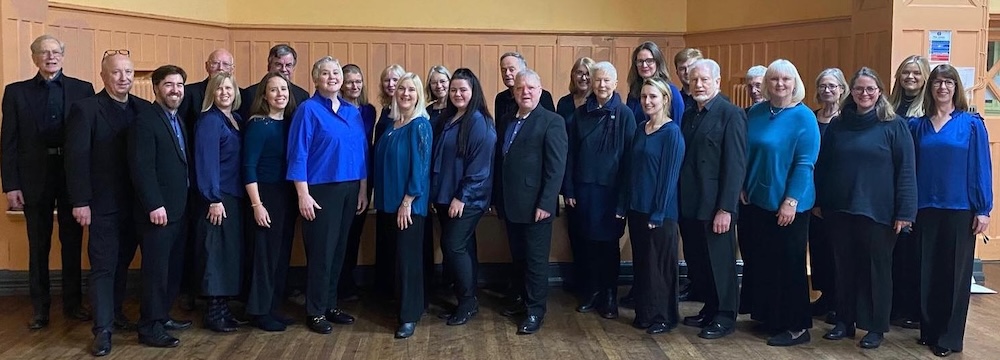
Drawing from all quarters of East Anglia, Suffolk Chamber Choir is a group of exceptional singers who came together to form an inclusive elite chamber choir in the early part of 2025. It aims to showcase diverse repertoire with innovative collaborations reaching audiences across the region and beyond.
Sopranos
Cat Bensley
Penny Dawe
Vanessa Fricker
Claire Gower
Camilla Haycock
Caroline Hughes
Coral McEwen
Caroline Palmer
Tracey Rayner
Penny Rooney
Belinda Shave
Judie Shore
Izzy Smales
Altos
Gerlinde Achenbach
Tamsin Anderson
Karen Bainbridge
Laura Heaton
Ruth McCabe
Bev Steensma
Ruth Stone
Anna Winton Mills
Tenors
Duncan Archard
Howard Blackett
David Freestone
Mark Nicholson
Simon Murdoch
Kit Prime
Geoffrey Smeed
Basses
Sparky Anderson
Richard Blay
Will Harrison
Anthony Picton
Rob Picton
Join us!
If you have exceptional musicianship, good vocal range and an ability to sightread music, why not join us?
For more information about the audition process contact us at: admin@suffolkchamberchoir.org.uk